TCO Analysis 2026:
Self-built vs. Leased macOS Clusters
The infrastructure landscape of 2026 demands a radical rethinking of asset management. As Apple Silicon performance continues its exponential climb, the decision between CapEx and OpEx for Mac clusters has become the defining factor in development efficiency and fiscal health.
01. The Tipping Point: Why 2026 is Different
Entering February 2026, the mobile development industry has moved beyond the "initial transition" phase of Apple Silicon. We are now in an era of ultra-dense, high-performance computing where the M4 Ultra and its successors have redefined what is possible in a CI/CD pipeline. However, this power comes with a significant infrastructure burden. The days of "stacking Mac minis in a closet" are officially over.
Today, Total Cost of Ownership (TCO) is no longer just the price tag of the hardware divided by its lifespan. It is a multi-dimensional matrix involving energy efficiency (PUE), thermal management, rack density, network latency, and—most importantly—the velocity of hardware obsolescence. In 2026, a high-end cluster built today may be technically "viable" in three years, but economically obsolete in eighteen months due to the performance leaps in Neural Engine and Unified Memory bandwidth.
02. The Hidden "Iceberg" Costs of Self-Built Clusters
When procurement teams look at a quote for 100 Mac Studio nodes, they often only see the "tip of the iceberg." Beneath the surface lies a massive array of operational expenses that quickly erode any perceived savings from ownership.
A. Data Center Real Estate and Thermal Load
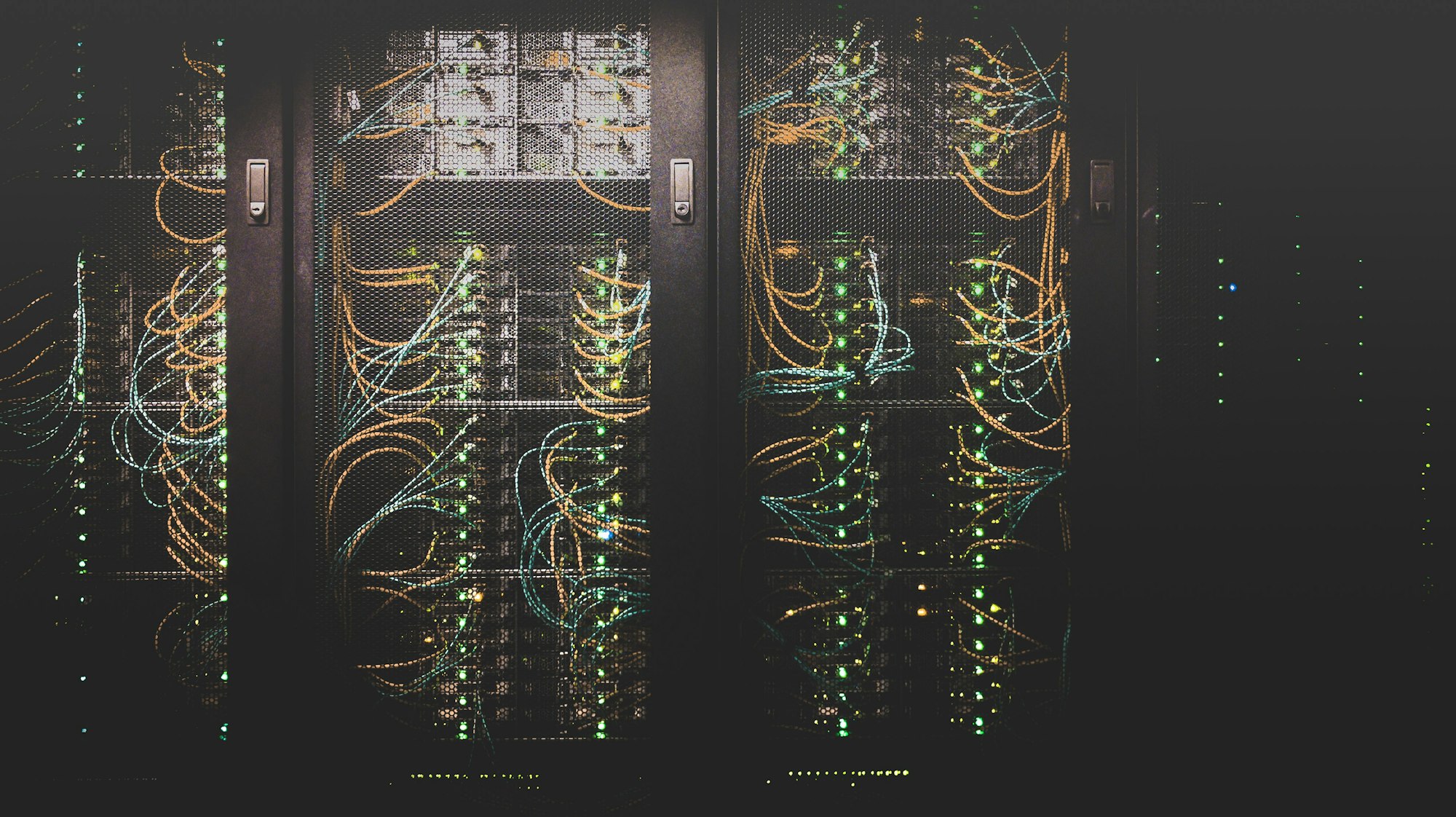
Modern M4 Ultra clusters generate significant heat. In 2026, standard office cooling is insufficient for high-density build farms. A 50-node cluster requires specialized server room infrastructure with Hot/Cold aisle containment. Self-hosting means you are paying for every square foot of conditioned space, which in major tech hubs like San Francisco, London, or Singapore, has reached record highs.
B. The "Maintenance Tax"
Mac hardware is exceptionally reliable, but at the scale of 50-100 nodes, hardware failures are a statistical certainty. A self-built cluster requires dedicated IT staff for hardware swaps, firmware updates, and macOS version management across the fleet. In 2026, the average salary for a DevOps Engineer capable of managing specialized Mac infrastructure has risen by 25% compared to 2023 levels, making "human capital" the largest single component of self-hosting TCO.
C. Network and Interconnect Complexity
To truly leverage a cluster for distributed builds or large-scale testing, you need 10GbE or 25GbE interconnects. Building this networking stack internally—ensuring low-latency communication between nodes and your storage backend—is a non-trivial engineering task that often takes months to perfect, delaying your time-to-value.
03. Technical Comparison: Virtualization vs. Direct Silicon Access
Many self-built solutions rely on virtualization (using frameworks like Tart or Anka) to manage resources. While virtualization provides flexibility, it introduces a "Virtualization Tax" of 10-20% on CPU performance and even more on GPU/Neural Engine tasks. In 2026, where every second saved in an Xcode build translates to thousands of dollars in developer productivity, this overhead is a significant cost center.
MacDate’s lease model focuses on Bare-Metal Direct Access. By leasing a cluster from MacDate, you aren't just getting "a slice of a server"; you are getting direct, unmediated access to the M4 silicon. This ensures that your CI/CD pipelines run at the absolute theoretical limit of the hardware, maximizing your ROI on every compute hour.
04. The 2026 TCO Breakdown: A 3-Year Projection
Let’s compare the costs for a 20-node M4 Ultra cluster (64GB RAM, 2TB SSD per node) over a 36-month period. This comparison assumes a mid-sized development team with a moderate CI/CD load.
| Cost Category (36 Months) | Self-Built (CapEx) | MacDate Leased (OpEx) |
|---|---|---|
| Hardware Acquisition | $119,980 (Upfront) | $0 |
| Facility, Power & Cooling (PUE 1.4) | $38,500 | Included |
| Managed Services & Maintenance | $54,000 | Included |
| Software Licenses (Orch. & Monitoring) | $12,000 | Included |
| Opportunity Cost of Obsolescence | High (Locked into M4) | Zero (Upgrade Path to M5/M6) |
| Annual Subscription/Usage Fee | $0 | $142,000 (Predictable) |
| Total 3-Year TCO | $224,480 | $142,000 |
View full M4 cluster pricing details
In this scenario, the leased model saves the organization over $82,000 (approx. 36.7%) over three years. More importantly, it preserves capital that can be deployed into R&D rather than depreciating silicon.
05. Risk Management: Why Leased Clusters Win on Compliance
In 2026, security is not optional. Ensuring a self-built cluster meets SOC2 Type II or ISO 27001 standards is an arduous process. It requires physical security controls, logging, audit trails, and environmental monitoring. For most software companies, this is a distraction from their core product.
MacDate's infrastructure is built from the ground up for compliance. By leasing our clusters, you inherit our security posture. Every node is wiped to a "zero-state" between uses, and our data centers feature biometric access controls and 24/7 monitoring. This reduces your audit burden and significantly lowers the risk of data breaches in your supply chain.
06. The "Agility Dividend": Scaling to Infinity (and Back)
The final, and perhaps most critical, advantage of the lease model is Elasticity. A self-built cluster is a fixed-capacity asset. If your team grows suddenly or you need to double your testing frequency for a major launch, your only option is to buy more hardware—which can take weeks to arrive and configure.
Conversely, if your project enters a maintenance phase, your self-built hardware sits idle, still consuming power and depreciating. With MacDate, you can scale your cluster size up or down via our API in minutes. You pay for what you use, when you use it. This "Agility Dividend" is hard to quantify on a balance sheet but is felt every day by the developers who no longer have to wait in a build queue.
# Scaling a Bare-Metal Cluster via MacDate CLI (2026)
# Increase capacity for a release sprint
$ macdate cluster scale --id "cl-99a2" --nodes 50 --type "m4-ultra"

[SUCCESS] Cluster cl-99a2 scaling initiated...
[INFO] Provisioning 30 new M4 Ultra nodes...
[INFO] Attaching 25GbE interconnects...
[SUCCESS] 50 nodes active. Time elapsed: 184 seconds.

# Scale down after release
$ macdate cluster scale --id "cl-99a2" --nodes 10
This level of control ensures that your infrastructure costs are a direct reflection of your business activity, rather than a fixed burden on your quarterly budget.
07. Sustainability and the ESG Factor in 2026
A factor that has moved from the periphery to the center of the CTO's dashboard in 2026 is Environmental, Social, and Governance (ESG) compliance. Data centers are under intense scrutiny for their energy consumption. Self-hosting a Mac cluster often means running hardware in sub-optimal environments where the Power Usage Effectiveness (PUE) is poor—often as high as 1.8 or 2.0.
By contrast, MacDate’s specialized Mac data centers are engineered for a PUE of 1.15 or lower. Our facilities utilize advanced liquid cooling and AI-driven thermal management specifically tuned for the thermal profile of Apple Silicon. Furthermore, our lease model promotes a circular economy. When a node is retired from our high-performance fleet, it is refurbished and transitioned to our "Economy Tier" or secondary markets, ensuring that the embedded carbon in the hardware is amortized over a much longer lifecycle than a typical corporate refresh cycle allows.
For large enterprises, reporting the reduced carbon footprint achieved by switching from inefficient local hosting to MacDate’s green infrastructure has become a key part of their annual sustainability reports. In 2026, "Efficient Computing" is no longer just a technical metric; it is a corporate responsibility.
08. Conclusion: The Decision for the Modern CTO
The TCO analysis of 2026 is clear. Unless your organization has specific, extreme regulatory requirements that mandate physical possession of hardware, the self-built Mac cluster is a legacy approach. The hidden costs, operational risks, and hardware obsolescence cycles make it a poor financial and technical choice.
Leasing high-performance bare-metal M4 clusters from MacDate provides the perfect balance of raw power, financial predictability, and operational agility. It allows your team to focus on what they do best: building incredible software for the Apple ecosystem, while we handle the silicon that powers it.
Ready to modernize your infrastructure? Don't get trapped in a CapEx cycle that slows you down. Join the hundreds of industry leaders who have switched to MacDate's bare-metal clusters and realized the true dividends of the 2026 rental model.