Hybrid Cloud Architecture:
Integrating macOS Physical Clusters with Public Clouds
In the complex ecosystem of 2026, the binary choice between "Public Cloud" and "On-Premise" has vanished. For enterprises deeply invested in the Apple platform, the path forward is Hybrid: marrying the orchestration power of global clouds with the raw, uncompromising performance of bare-metal macOS clusters.
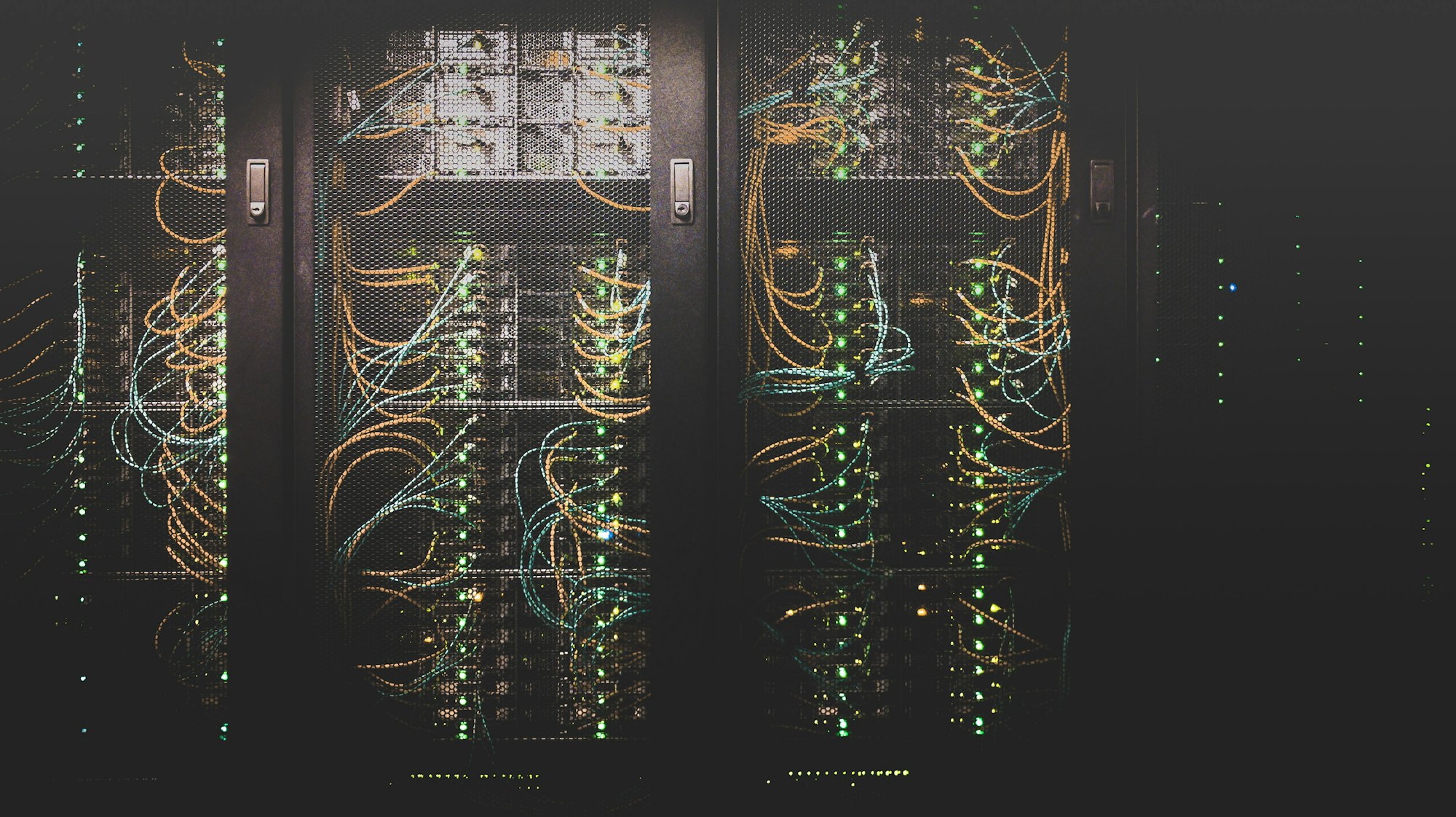
01. The Missing Piece in Enterprise Cloud
By February 2026, the migration of enterprise workloads to the cloud is nearly universal. However, a significant gap remains: native macOS infrastructure. While public cloud giants like AWS, Google Cloud, and Azure have made strides in offering Mac instances, these solutions often come with caveats—higher latency, restrictive licensing models, and hardware that lags behind the latest Apple Silicon releases.
The "Hybrid Cloud" approach solves this by treating physical macOS clusters not as silos, but as high-performance compute extensions of your primary cloud environment. In this model, MacDate’s bare-metal M4 clusters serve as the specialized engine for compilation, testing, and AI inference, while the public cloud handles global orchestration, data storage, and user authentication.
02. The Connectivity Backbone: Bridging the Gap
The success of a hybrid architecture depends on the quality of the "bridge." In 2026, we utilize several sophisticated methods to ensure that your MacDate cluster feels like a local subnet within your AWS VPC or GCP Project.
A. High-Speed Interconnects (Direct Connect & Interconnect)
For large-scale operations, we leverage dedicated fiber paths. By establishing a 10Gbps or 100Gbps cross-connect between MacDate’s data centers and public cloud edge locations, we achieve sub-millisecond latency. This allows your CI/CD runners to pull large Docker images or build artifacts from S3 or GCS at wire speed, eliminating the "egress bottleneck" that plagues many cross-cloud configurations.
B. WireGuard-based SD-WAN
For mid-sized teams, we implement a hardened SD-WAN layer using optimized WireGuard protocols. This provides a secure, encrypted tunnel between your cloud-based orchestration layer (like GitHub Actions runners or Jenkins controllers) and the bare-metal Mac nodes. In 2026, the M4's cryptographic acceleration ensures that even with 256-bit encryption, the throughput is nearly identical to unencrypted traffic.
03. Architectural Pattern: The "Orchestration-Compute" Split
The most efficient hybrid model involves separating the Control Plane from the Data Plane. Here is how leading 2026 development teams structure this:
- Public Cloud (AWS/GCP/Azure): Hosts the GitHub Actions Self-Hosted Runner Controller, artifact repositories (JFrog/Artifactory), and project management tools.
- MacDate Bare-Metal Cluster: Executes the actual `xcodebuild` tasks, UI testing suites, and Neural Engine-accelerated ML fine-tuning.
This split ensures that you maintain the global scalability and compliance features of the public cloud while benefiting from the 3x-5x performance boost provided by bare-metal M4 hardware over virtualized cloud instances.
# Example: GitHub Actions Runner Configuration in a Hybrid Setup
# The controller runs on AWS EKS, dispatching jobs to MacDate nodes
$ kubectl get pods -n actions-runner-system
NAME                                READY   STATUS    AGE
runner-m4-cluster-001               1/1     Running   12m
runner-m4-cluster-002               1/1     Running   12m

# MacDate node receiving the job via secure interconnect
[INFO] Job "Build-iOS-App-v2.6" assigned to node mac-m4-ultra-19
[INFO] Syncing source from AWS CodeCommit... (Throughput: 850 MB/s)
[INFO] Execution started: xcodebuild -workspace MyApp.xcworkspace ...
04. Security and Data Sovereignty
Security is the primary concern for any hybrid strategy. In 2026, we employ a **Zero Trust** architecture for all cross-cloud communication. Every MacDate node is assigned a unique identity via SPIFFE/SPIRE, ensuring that it can only access authorized resources in your public cloud environment.
Furthermore, the hybrid model allows for superior data sovereignty. Sensitive source code and signing certificates can be kept within the physical confines of your MacDate cluster, while only non-sensitive build logs and metadata are sent back to the public cloud. This reduces the attack surface and simplifies compliance with rigorous standards like SOC2 and GDPR.
05. Use Case: AI Fine-Tuning and Inference
One of the most exciting developments in 2026 is the use of macOS clusters for **Local AI**. While public clouds are great for training massive LLMs on H100s, fine-tuning smaller, specialized models for Apple platforms (like CoreML models) is significantly more efficient on the native hardware they will run on.
A hybrid workflow might look like this:
1. Large-scale data processing in **BigQuery (GCP)**.
2. Model training on **NVIDIA GPUs (AWS)**.
3. Fine-tuning and quantization for Apple Silicon on **MacDate M4 Ultra Clusters**.
4. Direct deployment to the App Store or internal distribution.
The M4's Unified Memory architecture is a game-changer for AI tasks that require high-bandwidth access to model weights, making it a critical component of the modern AI development stack.
06. Cost Optimization in the Hybrid Era
The "Cloud-Only" strategy often results in "Sticker Shock" due to high egress fees and the premium charged for macOS instances. By transitioning to a hybrid model with MacDate, organizations typically see a **40-60% reduction in infrastructure spend** for their Apple-related workloads.
| Resource Type | Public Cloud (Mac Instance) | MacDate Hybrid Model |
|---|---|---|
| Compute Power | Shared/Virtualized (Older Gen) | Bare-Metal M4 (Latest) |
| Network Egress | Expensive ($0.09/GB) | Optimized/Internal Rates |
| Scaling Agility | Minutes to Hours (Availability) | Instant (Dedicated Cluster) |
| Estimated Monthly Savings | Base | Approx. 45% Saving |
Explore M4 cluster pricing for hybrid setups
07. Conclusion: The Future is Composable
The integration of macOS physical clusters with public clouds represents the next phase of infrastructure evolution. In 2026, the most successful companies are those that build "Composable Infrastructure"—choosing the best hardware for the job, regardless of where it physically sits, and connecting it through a unified, high-performance network.
MacDate is at the forefront of this revolution. We don't just provide Mac servers; we provide the specialized compute engine for the hybrid world. Whether you are building the next generation of iOS apps or deploying custom ML models to millions of devices, our bare-metal clusters integrated with your existing cloud environment will give you the edge you need.
Ready to architect your hybrid future? Contact our technical team today for a deep-dive session on how to integrate MacDate's clusters with your AWS or GCP environment.