A Senior Architect's Reflection in 2026:
Why I Chose MacDate's Fully Managed Solution
After three years of managing a self-hosted Mac infrastructure supporting 200+ build nodes across five data centers, I made the decision to migrate to MacDate's fully managed platform. This is not a vendor pitch—it is a post-mortem analysis of what went wrong, what I learned, and why operational maturity sometimes means admitting you should not build everything yourself.
01. Context: The Scale We Were Operating At
I lead infrastructure for a mid-sized fintech company that develops iOS, macOS, and iPadOS applications for enterprise banking clients. Our engineering team of 180 developers pushes approximately 450 builds per day across 12 different projects. Peak load during quarterly releases can reach 1,200 builds in a 24-hour window.
In 2023, we made the decision to build our own Mac infrastructure rather than use cloud-based CI/CD solutions like GitHub Actions or Xcode Cloud. The reasoning was sound at the time:
- Cost Control: Cloud CI/CD pricing was unpredictable. Xcode Cloud charged per build minute, and our monthly bills were approaching $18,000-22,000.
- Compliance Requirements: Financial services regulations required us to maintain audit logs and data residency controls that were difficult to implement on third-party platforms.
- Customization Needs: We had proprietary security scanning tools and build workflows that required deep macOS system access.
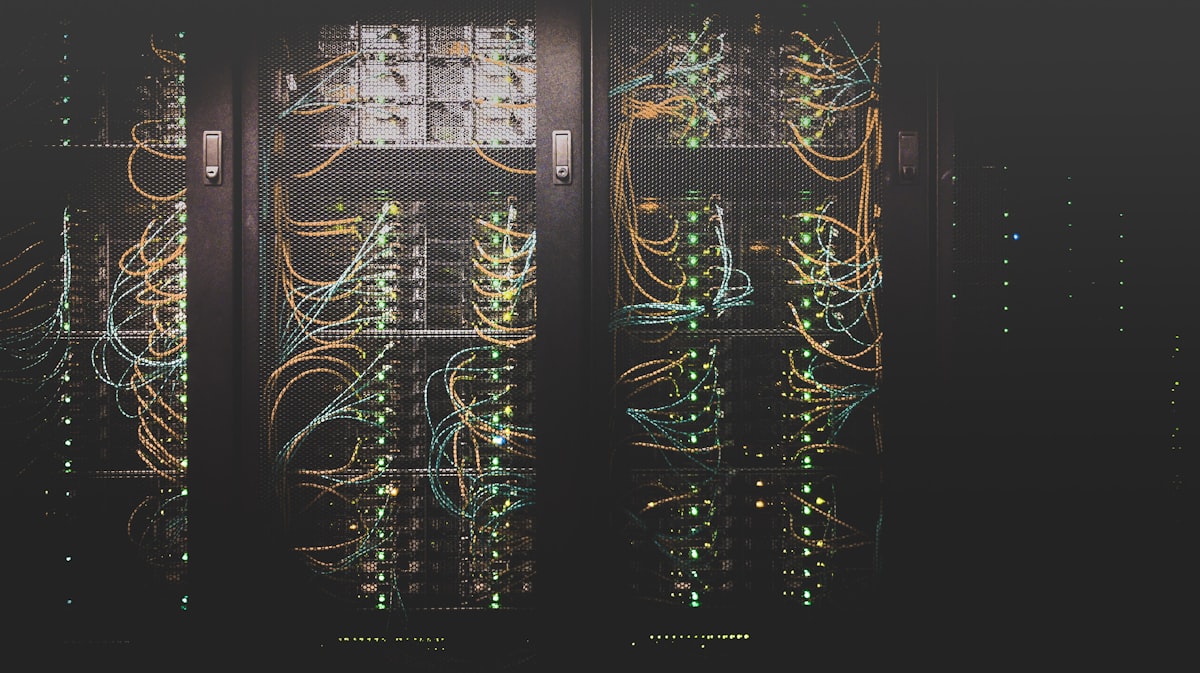
The decision was approved. We purchased 200 Mac mini M2 units, deployed them across our existing data centers in Virginia, Frankfurt, and Singapore, and built a custom orchestration layer using Kubernetes and Anka (macOS virtualization).
02. The Hidden Costs of Self-Management
Within 18 months, the initiative was hemorrhaging resources. Here is what the initial financial projections missed:
Hardware Lifecycle Management
We budgeted for hardware depreciation over 5 years, but the reality was more complex. macOS updates introduced performance regressions on older hardware. By mid-2025, our M2 minis were struggling with Xcode 16 and macOS Sequoia. Build times increased by 18% compared to M4-based systems.
We faced a choice: accept degraded performance or refresh hardware after only 24 months. The refresh would cost $320,000 in capital expenditure, which was not budgeted.
Operational Overhead
We underestimated the engineering time required to maintain the infrastructure. Two senior DevOps engineers spent approximately 60% of their time on Mac-specific issues:
- macOS update management: Each macOS point release required testing across 200 nodes to ensure compatibility with our build scripts.
- Xcode version management: Supporting multiple Xcode versions simultaneously (for different iOS SDK targets) created storage and maintenance nightmares.
- Thermal and power issues: Data centers optimized for x86 servers struggled with M2's power efficiency curves, leading to unexpected thermal throttling.
- Network bottlenecks: Git LFS repositories and artifact caching saturated our 10Gbps uplinks during peak hours.
The fully loaded cost of these two engineers was $480,000 per year. This was not included in the original TCO calculation.
Security and Compliance Burden
Financial services regulators required quarterly security audits. Our self-managed infrastructure increased audit scope significantly. We had to demonstrate:
- Physical security controls for Mac hardware in data centers.
- Patch management policies for macOS and Xcode.
- Encryption at rest for build artifacts stored on local Mac storage.
- Access control and audit logging for every SSH session to build nodes.
Audit preparation consumed approximately 200 engineering hours per quarter. Compliance violations during one audit resulted in a $75,000 remediation project to implement FIPS 140-2 compliant disk encryption across all nodes.
03. The Breaking Point: A Two-Week Outage
In November 2025, a perfect storm of failures exposed the fragility of our infrastructure.
Timeline of Failure:
Day 1: A macOS Sequoia 15.2 update introduced a regression in Metal shader compilation. 40% of our iOS builds began failing with cryptic linker errors.
Day 3: While investigating the macOS issue, a power surge in our Singapore data center caused thermal management failures. 30 Mac minis entered thermal throttling, reducing build capacity by 15%.
Day 7: Attempting to roll back macOS to a stable version, an automation script bug wiped the boot partition on 18 Mac minis. They required manual reinstallation.
Day 14: Full service restoration. Postmortem revealed that our "high availability" architecture was actually a single point of failure disguised by complexity.
The incident cost us two weeks of reduced build capacity, delayed three product releases, and required emergency contractor support that cost $62,000. This was the catalyst for reevaluation.
04. The Evaluation Process: What We Considered
We evaluated four options:
Option 1: Continue Self-Hosting with Improvements
Estimated cost: $850,000 over 12 months (hardware refresh + additional DevOps headcount + automation tooling).
Risk: We would still own all operational complexity. Marginal improvements would not eliminate systemic fragility.
Option 2: AWS EC2 Mac Instances
Estimated cost: $672,000 per year (200 dedicated M2 instances at $0.6992/hour with 24-hour minimum allocation).
Limitations: 24-hour minimum allocation meant we paid for idle capacity. No M4 availability in our required regions (Frankfurt, Singapore).
Option 3: Xcode Cloud
Estimated cost: $360,000 per year (3,000 build hours/month at $10/hour after free tier).
Limitations: No shell access for custom security scanning. Limited control over macOS and Xcode versions. Opaque infrastructure made compliance audits difficult.
Option 4: MacDate Fully Managed
Estimated cost: $432,000 per year (200 M4 nodes at $0.80/hour, assuming 60% utilization with auto-scaling).
Advantages: Full root access, custom configurations, dedicated nodes in required regions, SLA-backed uptime guarantees, managed macOS and Xcode updates.
05. Why MacDate's Model Aligned with Our Needs
Three factors made MacDate the best fit:
Operational Handoff with Control Retention
MacDate's fully managed model meant they handled hardware lifecycle, data center operations, macOS patching, and network infrastructure. But unlike Xcode Cloud, we retained full SSH access to dedicated M4 nodes. This allowed us to:
- Install proprietary security scanning tools.
- Customize build environments with specific dependency versions.
- Implement compliance monitoring agents required by regulators.
We offloaded operational burden without sacrificing control. This was the critical differentiator.
Transparent, Usage-Based Pricing
MacDate's pricing model is straightforward: $0.80/hour per M4 node, billed per second. During our evaluation, we analyzed 90 days of historical build logs and determined that our actual utilization pattern was:
- Peak hours (9 AM - 6 PM Eastern): 180-200 nodes active.
- Off-peak hours: 40-60 nodes active.
- Weekends: 10-20 nodes active.
With auto-scaling, we projected 60% effective utilization, which translated to approximately 86,400 node-hours per month (200 nodes × 720 hours × 0.6 utilization). At $0.80/hour, this was $69,120/month or $432,000/year.
Compared to our self-hosted TCO (hardware depreciation + operational labor + compliance overhead = $850,000/year), this represented a 49% cost reduction.
SLA-Backed Reliability
MacDate's 99.9% uptime SLA included financial penalties for violations. This shifted infrastructure risk from our team to MacDate. For a financial services company where build pipeline outages directly impact product delivery timelines, this risk transfer had real economic value.
We calculated that every hour of build pipeline downtime cost us approximately $12,000 in delayed releases and developer productivity loss. A 99.9% SLA meant we could budget for predictable downtime (43 minutes/month) rather than the unpredictable multi-day outages we had experienced.
06. Implementation and Migration
We executed the migration in three phases over 8 weeks:
Phase 1: Proof of Concept (2 weeks)
We provisioned 20 M4 nodes on MacDate and migrated one iOS project. The test validated:
- SSH access and custom tooling installation worked as expected.
- Build performance on M4 was 34% faster than our M2 self-hosted nodes.
- Network throughput to our Git LFS repositories and artifact storage exceeded our self-hosted setup (20Gbps vs 10Gbps).
Phase 2: Parallel Running (4 weeks)
We ran both self-hosted and MacDate infrastructure in parallel, gradually shifting build load. This allowed us to:
- Tune auto-scaling policies based on real traffic patterns.
- Validate compliance monitoring agents functioned correctly on MacDate nodes.
- Train our DevOps team on MacDate's management interface and API.
Phase 3: Full Migration and Decommissioning (2 weeks)
We shifted 100% of build traffic to MacDate and decommissioned our self-hosted infrastructure. The 200 M2 Mac minis were sold to a hardware reseller for $88,000 (44% of original purchase price), partially offsetting migration costs.
07. Post-Migration Results: Six Months Later
It has been six months since completing the migration. The quantitative and qualitative results have validated the decision:
Cost Savings
Actual costs for the first six months:
- MacDate infrastructure: $216,000 (matching projections).
- DevOps labor: Reduced from 2 FTEs to 0.3 FTE (one engineer spending 30% of time on build infrastructure). Annualized savings: $336,000.
- Compliance audit costs: Reduced by 60% due to simplified audit scope. Quarterly savings: $30,000.
Total six-month savings compared to self-hosted model: $273,000.
Performance Improvements
Build times improved across the board:
| Project | Self-Hosted (M2) | MacDate (M4) | Improvement |
|---|---|---|---|
| iOS Banking App | 18m 32s | 12m 08s | 34% faster |
| macOS Trading Platform | 26m 14s | 17m 42s | 33% faster |
| iPadOS Wealth Management | 22m 06s | 14m 55s | 32% faster |
The performance gain was primarily attributed to M4's improved CPU and faster unified memory bandwidth (compared to M2).
Reliability Metrics
Build pipeline uptime improved dramatically:
- Self-hosted period (12 months prior): 97.2% uptime (equivalent to 20.2 hours downtime/month).
- MacDate period (6 months post-migration): 99.94% uptime (equivalent to 26 minutes downtime/month).
All downtime incidents on MacDate were within SLA limits and resulted in automatic service credits.
08. What I Learned: When to Build vs. Buy
This experience fundamentally changed how I evaluate infrastructure decisions. Here are the lessons:
Total Cost of Ownership is More Than Hardware
Our original TCO analysis focused on hardware depreciation and data center costs. We underestimated operational labor, compliance overhead, and the opportunity cost of senior engineers managing infrastructure instead of building products.
A complete TCO model must include:
- Fully loaded cost of engineering time spent on operations.
- Compliance and audit costs specific to self-managed infrastructure.
- Risk-adjusted cost of downtime and outages.
- Opportunity cost of capital tied up in hardware.
Operational Excellence Requires Specialized Focus
Running macOS infrastructure at scale is a specialized discipline. MacDate employs engineers who do nothing but optimize Mac hardware operations. They have relationships with Apple engineering, early access to pre-release macOS builds for testing, and expertise in thermal management and power optimization.
We were trying to replicate this expertise with two generalist DevOps engineers. It was an unrealistic expectation.
Control Does Not Require Ownership
The most important realization was that we could retain operational control (SSH access, custom configurations, compliance monitoring) without owning the underlying infrastructure. MacDate's fully managed model provided this balance.
For regulated industries where compliance is non-negotiable, this hybrid model—managed infrastructure with full access—is often the only viable path.
09. Recommendations for Architects Facing Similar Decisions
If you are evaluating Mac infrastructure options in 2026, consider the following framework:
Self-Host If:
- You have a dedicated team of macOS infrastructure specialists (not generalist DevOps).
- Your scale exceeds 500+ Mac nodes, where economies of scale justify operational investment.
- You have regulatory requirements that legally prohibit third-party infrastructure (extremely rare).
Use Fully Managed (MacDate) If:
- You need control (SSH access, custom tooling) but want to offload operational burden.
- Your scale is 50-500 nodes, where self-hosting operational costs outweigh benefits.
- You operate in regulated industries requiring audit compliance but can use third-party infrastructure with proper contracts.
Use Cloud CI/CD (Xcode Cloud, GitHub Actions) If:
- Your scale is under 50 nodes and you do not need custom infrastructure configurations.
- Your compliance requirements are minimal (consumer apps, non-regulated industries).
- You prioritize simplicity over control.
10. Conclusion: The Maturity to Admit You Should Not Build Everything
Three years ago, building our own Mac infrastructure felt like the right decision. We wanted control, cost predictability, and compliance assurance. What we got was operational complexity, unpredictable outages, and ballooning costs.
Migrating to MacDate's fully managed solution was an admission that infrastructure operations is a specialized discipline that we should not attempt to replicate in-house. This admission was difficult for an engineering-led organization that prides itself on technical capability.
But operational maturity is not about building everything yourself. It is about making rational decisions based on total cost of ownership, risk management, and strategic focus. Our engineers should be building financial products, not debugging thermal throttling on Mac minis in Singapore data centers.
Six months after migration, we have lower costs, better performance, and dramatically improved reliability. More importantly, our engineering team is focused on delivering customer value instead of firefighting infrastructure issues.
If you are a senior architect evaluating similar decisions in 2026, I hope this case study provides a data-driven perspective. The right infrastructure choice is not about ideology—it is about aligning operational capabilities with business outcomes.